среда, 3 сентября 2014 г.

Энерион - эффективное и безопасное средство для лечения астении у больных с психовегетативным синдромом

http://www.paininfo.ru/articles/829.html 


Вейн А.М., Гордеев С.А., Федотова А.В.

Астенические состояния различной этиологии в последнее время имеют неуклонную тенденцию к росту и являются одной из наиболее часто встречающихся жалоб на приеме у врачей всех специальностей.
Для астении характерны длительно существующие быстрая утомляемость и общая слабость, возникающие без значительных физических или интеллектуальных нагрузок, и не проходящие после отдыха. При астении выявляются эмоциональная лабильность, мотивационные и сексуальные расстройства, нарушения сна, снижение аппетита, памяти, внимания, гиперестезия (повышенная чувствительность). Астения значительно снижает качество жизни пациентов, приводя к стойкой и выраженной дезадаптации.
По этиологии астения делится на органическую и «функциональную». Наиболее частые причины, вызывающие развитие органической формы астении – инфекционные, эндокринные, неврологические, онкологические, гематологические заболевания, нарушения функции ЖКТ (в том числе и гепатиты), а также патология иммунной системы. «Функциональные» астенические расстройства предполагают существование нарушений психической сферы: психические заболевания, проявляющиеся различными формами депрессии, реактивные и невротические состояния, дистимии, сезонно-аффективные расстройства.
Астенический синдром всегда требует лечения независимо от его этиологии и стадии развития. Для терапии астенических расстройств используются различные препараты: ноотропы, адаптогены растительного происхождения, некоторые антидепрессанты и даже нейролептики. Однако стимулирующие свойства одних их перечисленных препаратов способны усиливать свойственную астении раздражительность, нарушения сна, вегетативные нарушения; седативные эффекты других усугубляют вялость и дневную сонливость. Поэтому создание препарата со сбалансированным противоастеническим действием является важной медико-социальной задачей.
Самым перспективных в этом отношении является препарат Энерион, представленный фармацевтическим заводом «Эгис» (Венгрия). Энерион является синтетическим соединением, полученным в результате соединения двух молекул диизобутирата тиамина дисульфидным мостиком. Обладая липофильными свойствами, Энерион быстро всасывается в ЖКТ и проникает через гематоэнцефалический барьер, накапливаясь в структурах лимбико-ретикулярного комплекса и особенно – в ретикулярной формации, гиппокампе, зубчатой извилине, клетках Пуркинье. Энерион обладает выраженным прохолинолитическим эффектом, потенцирует серотонинэргическую активность и способствует ресинхронизации циркадных ритмов.
В зарубежной литературе содержатся данные о благоприятных результатах применения Энериона при астении у больных с коронарной болезнью, с постинфекционной астенией, с синдромом раздраженного кишечника, у женщин в послеродовом периоде [8,9,11,12,13]. Целью нашего исследования было определить эффективность и переносимость препарата Энерион при лечении больных психовегетативным синдромом с выраженной астенией.
В исследуемую группу было отобрано 40 пациентов обоего пола (26 женщины и 14 мужчина) в возрасте от 18 до 62 лет (средний возраст 37,2 года) с психовегетативным синдромом, в клинической картине которых доминировали астенические симптомы.
Эффективность действия Энериона оценивалась по изменению субъективного самочувствия пациентов, динамике показателей психологических тестов и параметров вызванных потенциалов. Нежелательное действие лекарственного препарата регистрировалось как при помощи обычных анкет, так и путем целенаправленного опроса.
После двухнедельного периода wash-out проводилось фоновое исследование пациентов, включавшее клинико-неврологическое обследование, анкетирование, психологическое тестирование и исследование когнитивных вызванных потенциалов Р300 методом Odd-ball парадигма, характеризующим память и уровень направленного внимания [2]. Клинико-неврологический метод включал подробный сбор анамнестических данных с применением баллированных стандартизированных анкет для оценки состояния вегетативной нервной системы, самочувствия по визуальной аналоговой шкале (ВАШ), астении и анкеты качества сна [1].
Состояние психической сферы оценивалось с помощью теста Спилбергера (определение реактивной и личностной тревожности) и теста Бека (оценка депрессивных проявлений) [7,10,14]. Исследовались также кратковременная память (зрительная память на цифры и образы, опосредованное запоминание), концентрация внимания и работоспособность (тест Бурдона, таблицы Шульте) [3,5].
Пациентам назначалась монотерапия препаратом Энерион по 2 таблетки в сутки (400 мг сальбутиамина) в течение 28 дней. Повторное обследование проводилось на 7-й и 28-й день терапии. Когнитивные функции оценивались до лечения и после завершения терапии. Полученныерезультаты представлены в таблицах 1, 2.
У обследованных нами пациентов, помимо жалоб на общую слабость (100%), утомляемость (100%), чувство постоянной усталости (100%), снижение работоспособности (90%) и концентрации внимания (80%), ухудшение памяти (50%), трудности усвоения новой информации (47%), были выявлены неспецифические жалобы на повышенную тревожность (75%), чувство постоянного внутреннего напряжения (62,5%), снижение фона настроения (65%), снижение самооценки (55%), снижение аппетита (65%), головные боли, соответствующие критериям головных болей напряжения (55%), нарушения сна (55%), головокружение (48%), учащенное сердцебиение (45%), боли в левой половине грудной клетки, не связанные с физической нагрузкой (40%), гипотимические состояния (35%), чувство нехватки воздуха (27,5%). На фоне проводимого лечения достоверно регрессировали такие клинические проявления, как общая слабость (30%), утомляемость (30%), снижение работоспособности (27,5%), эмоциональная лабильность (25%), чувство внутреннего напряжения (27%), повышенная тревожность (17%), боли в области сердца (25%), головные боли (27%), нарушение сна (20%), трудности концентрации внимания (19%), нарушения памяти (20%).
Длительность заболевания составляла от 1 до 24,5 месяцев (средняя длительность 12,2±4,8 месяца). Среди факторов, провоцирующих развитие астенического синдрома, следует выделить: длительные психотравмирующие ситуации у 75%, работа без выходных и отпуска 50%, острая психотравмирующая ситуация 25%, тяжелая физическая работа 10%, сопутствующие соматические заболевания 10%, у 50% пациентов наблюдалось сочетание двух и более предрасполагающих факторов.
По данным анкетного тестирования больные до лечения имели выраженные астенические проявления (высокие показатели по анкете астении), тревожные расстройства (повышенные показатели реактивной и личностной тревожности по тесту Спилбергера), значительные вегетативные расстройства (по данным анкеты вегетативных нарушений), нарушения сна (по данным анкеты субъективной оценки качества сна), легкую степень депрессии (по тесту Бека), плохое самочувствие (по визуальной аналоговой шкале). По всем фоновым параметрам больные достоверно отличались от группы здоровых испытуемых[4,6].
На седьмой день терапии 65% пациентов отметили значительное улучшение субъективного самочувствия, достоверно улучшились показатели по данным анкетного тестирования. К 28 дню терапии все исследуемые пациенты отметили значительное субъективное улучшение самочувствия (по ВАШ до лечения 6,55 балла, после – 3,84 балла), уменьшение выраженности астенических проявлений (общий балл выраженности астении достоверно уменьшился на фоне лечения с 18,1 до 11,5 балла), достоверное улучшение качества ночного сна (с 17,9 до 20,75 балла на фоне терапии), уменьшение выраженности тревожных и депрессивных проявлений (с 52,8 балла до 42,9 баллов и с 16,25 баллов до 10,55 баллов соответственно), уменьшение степени выраженности вегетативной дистонии (44,8 балла до лечения и 33,22 после) (табл. 1).
При анализе когнитивных функций до лечения было выявлено, что у обследованных нами пациентов по сравнению со здоровыми испытуемыми наблюдается достоверно меньшее запоминание как цифр (кратковременная зрительная память на цифры), так и образов (кратковременная зрительная память на образы), достоверно затруднено опосредованное запоминание (способность не только удерживать в памяти вновь усвоенную информацию, но и возможность оперировать ей), достоверно хуже концентрация внимания (среднее время, затраченное на выполнение пяти черно-белых таблиц Шульте и количество допущенных ошибок в тесте Бурдона) и работоспособность (количество просмотренных строк в тесте Бурдона). К 28-му дню терапии все показатели достоверно улучшились по сравнению с фоновыми, не достигая величин здоровых испытуемых, но не отличаясь от них достоверно (табл. 2).
Проведенное исследование вызванных потенциалов Р300, оцениваемое как коррелят памяти и уровня направленного внимания, выявило следующее: амплитудно-временные параметры потенциала Р300 не имели достоверных отличий по латентным периодам по сравнению со здоровыми испытуемыми. До лечения отмечено достоверное уменьшения амплитуды компонента Р300 (4,31±0,51 мкВ) по сравнению со здоровыми испытуемыми в 2,5 раза (12,78±0,58 мкВ), что свидетельствует о нарушении направленного внимания и о трудностях сосредоточения. После лечения наблюдается достоверное увеличение амплитуды компонента Р300 у больных (7,06 ±0,54 мкВ) по сравнению с его исходным фоном, но это увеличение не достигало величин здоровых испытуемых.
Эффективность действия препарата оценивалась по результатам показателя балла общей астении на 28 день терапии. Все обследованные нами больные были разделены на три группы:
  • 1 группа – высокая эффективность – показатель <12 баллов;
  • 2 группа – удовлетворительная эффективность – показатель от12 до 18 баллов;
  • 3 группа – неудовлетворительная эффективность показатель >18 баллов.
На 28-й день терапии пациентов с неудовлетворительной эффективностью (т.е. относящихся к третьей группе) не оказалось, во вторую группу вошли 10 пациентов (25%), в первую 30 пациентов (75%). У пациентов первой группы жалобы астенического круга регрессировали полностью. Пациенты второй группы имели достоверно большую длительность заболевания (17,5±3,1 месяца) по сравнению с пациентами первой группы (7,4±2,6 месяца) и достоверно больший процент сочетания факторов, приводящих к возникновению астении (100% во второй группе и 33,3% в первой).
Таким образом, можно сделать вывод, что предикторами эффективности препарата являются меньшая длительность заболевания, меньшее количество факторов, приводящих к возникновению астении, меньший балл по анкете астении.

Заключение

Результаты нашего исследования показали хорошую эффективность препарата Энерион при лечении больных психовегетативным синдромом с выраженными астеническими проявлениями. Препарат был эффективен у всех исследуемых пациентов, у 75% пациентов действие препарата оценено как очень эффективное, у 25% пациентов действие препарата оценено как удовлетворительное. Препарат отличается хорошей переносимостью и удобной формой дозирования.
Энерион обладает выраженным противоастеническим и вегетотропным эффектом, нормализует структуру сна, нормализует общий фон настроения, улучшает качество жизни, оказывает выраженное положительное влияние на процессы усвоения и возможности оперировать новой информацией, улучшает концентрацию внимания и работоспособность.
Противоастенический эффект Энериона появляется уже к концу первой недели приема и нарастает в процессе терапии.Энерион может быть рекомендован к применению как в качестве монотерапии, так и в составе комбинированной терапии.

Литература:

  1. Вейн А. М. Заболевания вегетативной нервной системы. М. Медицина, 1991. 655 с. 
  2. Гнездицкий В. В. Вызванные потенциалы мозга в клинической практике. Таганрог, 1997. 367 с.
  3. Карелин А. А. Психологические тесты. М. Владос, 2001. 247 с.
  4. Окнин В. Ю. Клинико-физиологические аспекты патогенеза гипергидроза: Дис… канд. мед. наук. М., 1991.
  5. Райгородский Д. Я. Практическая психодиагностика .С. Бахрах. ,1998. 668 с. 
  6. Федотова А. В. Клинико-психовегетативные особенности лиц с артериальной гипотензией: Дис… канд. мед. наук. М., 2000.
  7. Ханин Ю. Л. Краткое руководство к применению шкалы реактивной и личностной тревожности Ч. Д. Спилбергера. Л., 1976., 40 с. 
  8. Acuna V. The use of salbutamine in a group of university students presenting with a psychosomatic fatigue syndrome. Gaz. Med., 1985; 92:1–3. 
  9. Archard J. A polyvalent approach to the treatment of post-infection asthenia: Arcalion Ther. Pharm.Clin., 1985; l.4: 23–27.
  10. Beck A. T., Ward C. M., Mendelsohn M. et al. An inventory for measuring depression. Arch. Gen. Psychiat., 1961; 5: 561 –571.
  11. Daniel J., Cristol R. The rehabilitation of patient with coronary artery disease: contribution of a new drug Med. Int., 1974; l.9:53–54.
  12. Feuerstein C. Neurophysiological data concerning fatigue. Role of activator reticular formation. Entretiens de Bichat., 1992.
  13. Martin A. Clinical trials with Arcalion in irritable colon syndrome. Vie Med., 1981; 12: 2–3. 
  14. Spielberger C. D., Gorsuch R. L., Lushene R. E. STAI manual for the State-Trait Anxiety Inventory Consulting. Psychologist. Press. Palo. Alto., 1970.
Источник http://rmj.ru

Энерион

Энерион® (Enerion®) 

Действующее вещество:   Сульбутиамин* (Sulbutiamine*)

Латинское название
Enerion®

АТХ

Фармакологическая группа

Нозологическая классификация (МКБ-10)

Состав
Таблетки, покрытые оболочкой
1 табл.
активное вещество:

сульбутиамин
200 мг
вспомогательные вещества: крахмал кукурузный — 12 мг; крахмальная паста высушенная — 40 мг; глюкоза (декстроза) безводная — 20 мг; лактозы моногидрат — 65,5 мг; магния стеарат — 3,5 мг; тальк — 9 мг

оболочка: натрия гидрокарбонат — 0,603 мг; натрия карбоксиметилцеллюлоза — 0,556 мг; белый пчелиный воск — 0,201 мг; титана диоксид (E171) — 8,43 мг; этилцеллюлоза — 0,485 мг; «Сансет» желтый (Sunset yellow FCF, E110) — 3 мг; глицерола моноолеат — 0,242 мг; полисорбат 80 — 0,302 мг; повидон — 0,692 мг; сахароза — 106,956 мг; кремния диоксид коллоидный безводный (Aerosil 130®) — 0,404 мг, тальк — 28,21 мг


Описание лекарственной формы
Таблетки, покрытые оболочкой: оранжевые, круглые, двояковыпуклые.
Фармакологическое действие
Фармакологическое действие - регулирующее метаболические процессы в ЦНС.

Фармакодинамика
Препарат Энерион® является синтетическим соединением, близким по строению к тиамину, по сравнению с которым молекула имеет открытый тиазольный цикл, дополнительную дисульфидную связь, липофильный эфир. Благодаря такой модификации сульбутиамин хорошо растворим в жирах, быстро всасывается из ЖКТ и легко проникает через ГЭБ; в отличие от тиамина, способен накапливаться в клетках ретикулярной формации, гиппокампе и зубчатой извилине, а также клетках Пуркинье и клубочках зернистого слоя коры мозжечка. На фоне приема Энериона® улучшается координация движения и увеличивается устойчивость к физическим нагрузкам, повышается устойчивость структур коры головного мозга к повторяющейся аноксии. Препарат эффективен при симптоматическом лечении функциональной астении.
Фармакокинетика
Сульбутиамин быстро всасывается, Cmax препарата в плазме крови достигается через 1–2 ч после приема. T1/2 — около 5 ч. Препарат выводится с мочой.
Показания препарата Энерион®
Симптоматическое лечение функциональной астении.
Противопоказания
Повышенная чувствительность к любому из компонентов препарата.
С осторожностью: лица до 18 лет (препарат не рекомендуется назначать из-за отсутствия клинических данных).
Применение при беременности и кормлении грудью
Согласно результатам клинических исследований, препарат не влияет на развитие плода. Тем не менее, в связи с отсутствием достаточных клинических данных Энерион® не рекомендуется принимать во время беременности, а также во время кормления грудью, т.к. в настоящее время неизвестно, способен ли сульбутиамин проникать в грудное молоко.
Побочные действия
Аллергические реакции (наличие в составе препарата красителя «Сансет» желтый), нарушения пищеварения, психоневрологические реакции (тремор, головная боль, возбуждение, общее недомогание).
Взаимодействие
Отсутствует.
Способ применения и дозы
Внутрь. Препарат рекомендован для применения только у взрослых пациентов.
Суточная доза — 2–3 табл. (400–600 мг) в 2 приема (во время завтрака и обеда). Продолжительность лечения не должна превышать 4 нед.
Передозировка
Симптомы: возбуждение с явлениями эйфории и тремором конечностей носят транзиторный характер и не требуют специального лечения.
Особые указания
В состав вспомогательных веществ препарата входит лактозы моногидрат. Вследствие этого данный препарат не рекомендуется назначать лицам с лактозной недостаточностью, галактоземией или синдромом глюкозной/галактозной мальабсорбции.
Влияние на способность управлять автомобилем и выполнять работы, требующие высокой скорости психомоторных реакций. Не влияет.
Форма выпуска
Таблетки, покрытые оболочкой, 200 мг. По 10 табл. в блистере (ПВХ/алюминий). По 2 блистера упакованы в картонную пачку. По 15 табл. в блистере (ПВХ/алюминий). По 2 или 4 блистера упакованы в картонную пачку.
Производитель
«Лаборатории Сервье Индастри» Франция. 905, шоссе Саран, 45520 Жиди, Франция.
Регистрационное удостоверение выдано фирме «Лаборатории Сервье», Франция.
Экспортер: ЗАО «Фармацевтический завод ЭГИС», Венгрия.
По всем вопросам обращаться в представительство ЗАО «Фармацевтический завод ЭГИС» (Венгрия) в Москве. 121108, Москва, ул. Ивана Франко, 8.
Тел.: (495) 363-39-66; факс: (495) 789-66-31.
Условия отпуска из аптек
По рецепту.
Срок годности препарата Энерион®
3 года.

формы выпуска (4)


понедельник, 1 сентября 2014 г.

Growth Hormone Secretagogues

http://musculardevelopment.com/articles/research-and-review/1747-growth-hormone-secretagogues.html#.VAVTt0uhbDP


 Written by Dan Gwartney, M.D.


Growth hormone (GH) has long been considered the hormonal Fountain of Youth.1 In addition to aiding in tissue repair and bioenergetics, GH also has potent anabolic and lipolytic properties that are of particular interest to bodybuilders and athletes.2
A Widening Interest
GH use by healthy adults is limited due to legal restrictions and cost. Physicians are increasingly being prosecuted or professionally ostracized for treating age-related decline of GH. Prescribing GH to a healthy, young adult for the purposes of improving appearance or athletic performance is prohibited, subjecting physicians who violate this edict to a loss of his/her medical license and potential imprisonment.3 No athlete has yet been banned from a sport or lost endorsements because of GH, as no legally defensible test for the hormone currently exists, though the World Anti-Doping Agency (WADA) claims they are near to having an algorithm developed that can detect GH use.

Many companies have touted products that claim to increase GH by stimulating natural GH production and release. The limitation to circulating GH isn’t production, as the body has stores of GH in the pituitary well in excess of what’s released. Instead, an interactive network of releasing hormones, inhibitors and secretagogues regulate the endocrinological balance to prevent GH excess or deficit in healthy people.4 Athletes have learned that increasing GH levels through daily or near-daily injections promotes tissue healing, reduces body fat and may increase muscle mass. The elderly also have a strong interest in GH, as natural levels steadily decrease after age 30, a fact implicated in the age-related decline in physical and mental function.5 Thus, both groups have been following the developments, or lack thereof, of a class of drugs called GH secretagogues.

Several pharmaceutical companies, large and small, have developed GH secretagogues after it was discovered that small peptide fragments of the larger protein, growth hormone-releasing hormone (GHRH) can stimulate GH release from the pituitary.6 GHRH is a hormone produced in the hypothalamus, the gland in the brain that regulates many hormone levels. When the hypothalamus detects conditions that require the release of more GH, it releases GHRH, which travels directly to the pituitary to stimulate GH release. GHRH is too large a protein to be administered orally (meaning it can’t be taken as a pill), but smaller fragments of GHRH can be effective orally. Most of the early secretagogue work revolved around fragments of GHRH.
Other stimulators of GH have been discovered, including a hormone produced by the stomach called ghrelin (pronounced gray-lin). Ghrelin interacts with a different class of pituitary receptors than GHRH, promoting GH release through a separate pathway.7 Ghrelin’s name is a shortened form for GH-releasing protein. Pharmaceutical companies, including Pfizer, hastened to find novel drugs that might take advantage of the ghrelin pathways for stimulating GH release. Among these was a drug called capromorelin.8,9

An Unsuitable Candidate
Capromorelin is being referred to in the past tense, as Pfizer discontinued developing the drug in 2002 due to limited efficacy and reports of side effects that made it an unsuitable candidate for FDA approval.10 It’s very difficult to obtain FDA approval for drugs designed to treat signs and symptoms of normal aging, as the FDA doesn’t consider aging to be a disease and maintains very high standards for safety and efficacy.11 Other pharmaceutical powerhouses have also terminated their GH secretagogue programs, including Merck and Bristol-Myers Squibb.10,11
However, capromorelin recently made the news as one of the clinical investigators participating in a Pfizer study reported on results at the 2006 International Congress of Neuroendocrinology in Pittsburgh. Dr. George Merriam, professor of medicine at the University of Washington and a physician with the VA Puget Sound Health Care System, presented the findings of a multi-site study, which enrolled nearly 400 elderly adults between the ages of 65-84. Merriam stated that the subjects gained over 3 pounds of lean mass, improved physical function (activities like walking) and had higher GH and IGF-1 levels; side effects were minor and included fatigue, insomnia and hyperglycemia (high blood sugar).11,12

What wasn’t disclosed in the media reports on this presentation was that Dr. Merriam’s data was based on a study that terminated prior to 2002. The impression given most readers was that capromorelin was currently being actively developed and possibly moving toward FDA approval. A conversation with Stephen Lederer, senior director of media relations at Pfizer Global Research and Development confirmed that capromorelin was no longer being developed as of 2002, and that Dr. Merriam’s data related to earlier clinical trials. Mr. Lederer noted that there was enthusiasm among some of the clinical investigators for further developing capromorelin, but that an exhaustive analysis by Pfizer deemed it an unsuitable candidate after $71 million had been spent on the project.
Needless to say, it was not a decision made lightly. Mr. Lederer provided the following quote: “We greatly respect Dr. Merriam and the other investigators we work with and value their opinions. In this case, we firmly believe the decision to discontinue was appropriate and was in the interests of patients. We saw some increase in body mass, but no significant improvement in physical function. We believed that the lack of functional improvement and the side effects we observed were unacceptable in a chronic-use medicine. Our considerable experience led us to believe that this risk/benefit ratio would not have been acceptable to regulatory agencies for the prevention of age-related declines in physical performance.13
A Growing DemographicOn a more positive note, the rights to Bristol-Myers Squibb’s secretagogue program have been purchased by Elixir Pharmaceuticals, a smaller company that focuses on age-related diseases, so it’s possible that future developments in this area may be announced.14 The growing demographic of aging baby boomers and the recognition of further benefits associated with preventing age-related GH decline such as improved mental performance, in addition to the physical benefits, ensure continued public interest in the field.15
Given the lack of an available secretagogue and the efficacy of GH and the natural stimulus to GH provided by exercise, why would any athlete be interested in GH secretagogues?16 Previous experiences with dietary supplements claiming to promote GH release have been variable, with many providing little apparent benefit. Amino acid-based GH releasers, though capable of inducing a greater GH release at rest, appear to actually inhibit exercise-induced GH release.17-19

Pharmaceutical GH secretagogues may offer several benefits that aren’t currently available with GH. First, a number of orally active formulations have been developed. Though often short-acting, continuous-release capsules have been produced— even in the case of capromorelin. It’s unclear whether a sustained, long-acting version of a secretagogue would provide any clinical benefits, as GH is released in several short bursts throughout the day rather than as a long, continuous flow. Nonetheless, injections could be avoided, reducing cost, storage problems, injection site trauma or infection, as well as any related pain or discomfort. Second, the other “regulators” of GH release would still be active in the body, reducing the risk of side effects related to GH excess. It’s important to note that some side effects were still noted in Dr. Merriam’s study group, but it’s possible that a younger population may better tolerate the therapy. The observation of a higher risk of side effects in older subjects has been noted with testosterone therapy in men and estrogen therapy in women.20,21
The Return of Cadaveric GH
The last notable benefit relates to athletes who might abuse GH in sports doping. At this time, the International Olympic Committee (IOC) doesn’t ban GH secretagogues as they’re not commercially available, though expect WADA and related groups to respond more pro-actively after the revelations exposed during the BALCO scandals. While it’s obvious that GH secretagogues could be used by athletes for the purpose of increasing GH, it’s also possible that GH secretagogues could be used, even at this time, to foil the proposed GH-detecting algorithms suggested by WADA, allowing athletes to use the more potent and effective method of recombinant GH injections.

Here’s how it might work: Currently, it’s impossible to detect exogenous GH doping, as the recombinant product is identical to one form produced in the body.22,23 WADA has proposed to test athletes’ blood (as opposed to urine, which is used in nearly every other test) for two different sets of markers. First, WADA would check to see if the form of GH present in commercially available products is present in greater amounts, compared to the other forms, than is naturally seen.24 This is similar to the 4:1 ratio of testosterone:epitestosterone that’s used in some screens and was defeated by use of the “the cream.” The cream contained both testosterone and epitestosterone, which lowered the testosterone:epitestosterone ratio back down to accepted levels, preventing a positive drug test. [Author’s note— the ratio of testosterone to epitestosterone is the doping detection screen that prompted the allegations of testosterone use by 2006 Tour de France champion Floyd Landis].25

GH secretagogues could stimulate the release of natural GH, including all the isoforms tested for by the proposed WADA plan, restoring isoform ratios back to accepted levels. Of course, this would have to be titrated individually with each athlete, making it expensive, unless they were willing to chance it on a general program. This assumes that illicit manufacturers aren’t providing GH products that include a natural combination of the various isoforms. One deadly risk that WADA may actually be propagating is the return of cadaveric GH.

Prior to the discovery of a method of producing GH via recombinant methods (meaning in a laboratory), GH was obtained by extracting it from the pituitary of dead people. This now-banned source, while once valuable to children being treated with the extract, exposed them and doping athletes to the risk of contracting a deadly disease called Creutzfeldt-Jakob disease, similar to mad cow disease.26,27 There’s been at least one case of a French bodybuilder contracting Creutzfeldt-Jakob, possibly from cow-derived, cadaveric GH extract or tainted meat imported from Great Britain (England had an epidemic of mad cow disease at the time) or sporadically— as others of that era caught the disease.28,29 The French bodybuilder died at the age of 26.
The second leg of the GH-detection algorithm wouldn’t be circumvented, as it looks for markers of GH action to determine if supraphysiologic GH levels existed in an individual athlete, such as insulin-like growth factor-1 (IGF-1) and type III procollagen (P-III-P).30 Considering that most athletes are healthy, active and young, it’s likely that the threshold will have to be set fairly high. This would limit the total benefit that could be attained through GH and GH secretagogue use, though the window of opportunity would be greater for older athletes. Many athletes are extending their careers into their late 30s and early 40s, making this more relevant with each passing year.
Offering Great Promise to the Aging & Athletic
This article doesn’t advocate the use of GH or GH secretagogues for doping purposes. Instead, it’s a response to reports of archived data that has raised the hopes of those facing declining function due to aging, or those hoping for a safer and more convenient means of promoting optimal GH to improve appearance and performance. It also raises a prospective inquiry regarding attempts by doping athletes to violate the ethics and rules of organized sports.
GH therapy offers great promise to the aging and athletic. Secretagogues, such as capromorelin, may provide a bridging therapy to those who either choose to avoid GH injections, or seek less expensive alternatives. At this time, there’s no pharmaceutical secretagogue commercially available, and it remains to be seen if any of these oral drugs will provide similar effects to GH over the long-term. Further, it will be interesting to see if protocols will be developed allowing those first experiencing signs and symptoms of GH decline in their 30s and 40s to access either GH or GH secretagogues. As has been suggested with research involving the hormones testosterone and estrogen, introducing the therapy early, rather than waiting until frailties manifest, may reduce risks. As the first of the baby boomers enter their 60s, perhaps this politically affluent generation will prompt changes in legal and professional restrictions.
References:
1. Morley JE, Unterman TG. Hormonal fountains of youth. J Lab Clin Med, 2000;135:364-6.
2. Llewellyn W. Human Growth Hormone (somatotropin). Anabolics 2005. Body of Science Press, Jupiter, FL;2005:288-90.
3. Brundett R. Shortt gets jail; players not off hook. The State [South Carolina], 2006 July 18.
4. Surya S, Symons K, et al. Complex rhymicity of growth hormone secretion in humans. Pituitary, 2006 Jul 15;[Epub ahead of print].
5. Mooradian AD, Morley JE, et al. Endocrinology in aging. Dis Mon, 1988;34:393-461.
6. No Author Listed. Pralmorelin: GHRP 2, GPA 748, growth hormone-releasing peptide 2, KP-102 D, KP-102 LN, KP-102D, KP-102LN. Drugs, R D 2004;5:236-9.
7. Kojima M, Hosoda H, et al. Ghrelin is a growth-hormone-releasing acylated peptide from stomach. Nature, 1999;402:656-60.
8. Carpino PA, Lefker BA, et al. Pyrazolinone-piperidine dipeptide growth hormone secretagogues (GHSs). Discovery of capromorelin. Bioorg Med Chem, 2003;11:581-90.
9. Carpino PA, Lefker BA, et al. Discovery and biological characterization of capromorelin analogues with extended half-lives. Bioorg Med Chem Lett, 2002;12:3279-82.
10. Cohen F. Quest for youth: How research on anti-aging pill lost momentum. Available athttp://blog.crownstoneinsights.com/notes/archive/2006_07_01_archive.html, accessed July 28, 2006.
11. Fox M. Drug, blood provide clues to healthy aging-meeting. Reuters News Service, 2006 Jun 21.
12. Reedy J. Growth hormone stimulators improve physical function in older adults. Public Release – University of Washington, via EurekAlert! news service.
13. Lederer S. Personal communication via phone and email, July 25, 2006.
14. Elixir Pharmaceuticals. Elixir Pharmaceuticals licenses novel growth hormone secretagogue compound from Bristol-Myers Squibb for treatment of metabolic disorders. 2005 Apr 28. Press Release available at http://www.elixirpharm.com/company/pr/squibb_050205.pdf, accessed July 28, 2006.
15. Arwert LI, Veltman DJ, et al. Memory performance and the growth hormone/insulin-like growth factor axis in the elderly: a positron emission tomography study. Neuroendocrinology, 2005;81:31-40.
16. Weltman A, Weltman JY, et al. Growth hormone response to graded exercise intensities is attenuated and the gender difference abolished in older adults. J Appl Physiol, 2006;100:1623-9.
17. Marcell TJ, Taaffe DR, et al. Oral arginine does not stimulate basal or augment exercise-induced GH secretion in either young or old adults. J Gerontology, 1999;54A:M395-399.
18. Surninski RR, Robertson RJ, et al. Acute effect of amino acid ingestion and resistance exercise on plasma growth hormone concentration in young men. Int J Sport Nutr, 1997;7:48-60.
19. Besset A, Bonardet A, et al. Increase in sleep related GH and Prl secretion after chronic arginine aspartate administration in man. Acta Endocrinol (Copenh), 1982;99:18-23.
20. Bhasin S, Woodhouse L, et al. Older men are as responsive as young men to the anabolic effects of graded doses of testosterone on the skeletal muscle. J Clin Endocrinol Metab, 2005;90:678-88.
21. Naftolin F. Prevention during menopause is critical for good health: skin studies support protracted hormone therapy. Fertil Steril, 2005;84:293-4.
22. McHugh CM, Park RT, et al. Challenges in detecting the abuse of growth hormone in sport. Clin Chem, 2005;51:1587-93.
23. Rigamonti AE, Cella SG, et al. Growth hormone abuse: methods of detection. Trends Endocrinol Metab, 2005;16:160-6.
24. Project Review. Transition from research lab to ISO-certified optimization and production of differential immunoassays for the detection of GH-doping in sports based on the isoform approach. World Anti-Doping Agency. Available at http://www.wada-ama.org/rtecontent/document/DrSoehnge.pdf, accessed July 28, 2006.
25. Mann D. Innocent reasons for Landis dope test? WebMD Medical News 2006 July 27. Available athttp://www.webmd.com/content/article/125/116062, accessed July 28, 2006.
26. Brown P, Gajdusek DC, et al. Potential epidemic of Creutzfeldt-Jakob disease from human growth hormone therapy. N Engl J Med, 1985;313:728-731.
27. Deyssig R, Frisch H. Self-administration of cadaveric growth hormone to power athletes. Lancet, 1993;341:768-769.
28. Chazot G, Broussole E, et al. New variant of Creutzfeldt-Jakob in a 26-year-old French Man. Lancet, 1996;347:1181.
29. Verdrager J. New variant Creutzfeldt-Jakob disease and bovine pituitary growth hormone. Lancet, 1998;351:112-3.
30. Sonksen & Holt. The development of methodology for detecting growth hormone in sport:GH2004. World Anti-Doping Agency. Available at http://www.wada-ama.org/rtecontent/document/A1_2002_results.pdf, accessed July 28, 2006.

Born to cheat! How world class athletes can take drugs... and get away with it


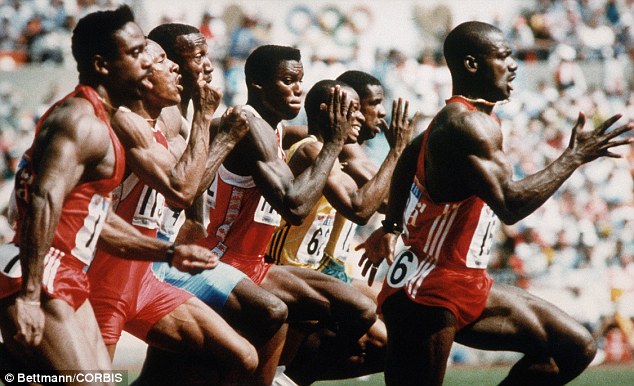
Eight of the most explosively gifted sprinters in the world are settling into their blocks on the start line of the 100m final at a major championship. The tension is almost unbearable; the rewards for success are huge.
To the spectators in the stadium and millions of fans watching on TV around the world, it is a spectacle without equal in sport. 
But what very few of them will even suspect is that it is statistically likely that at least one of those runners will have a genetic make-up allowing him to take performance-enhancing steroids for his entire career — and never fail a drug test.
Science fiction? Far from it.
The race that shocked the world: Ben Johnson won the 100m final at the Seoul Olympics but failed a drugs test and was stripped of the title
Now imagine the starting blocks of a swimming final at a significant international event in Asia — the 2014 Asian Games in Incheon, South Korea, for example.
It is quite feasible that half of the athletes about to dive into the water — perhaps as many as six out of eight depending on whether they are Chinese, Japanese, Korean or from another background — also have bodies that naturally allow them to take drugs but not get caught.
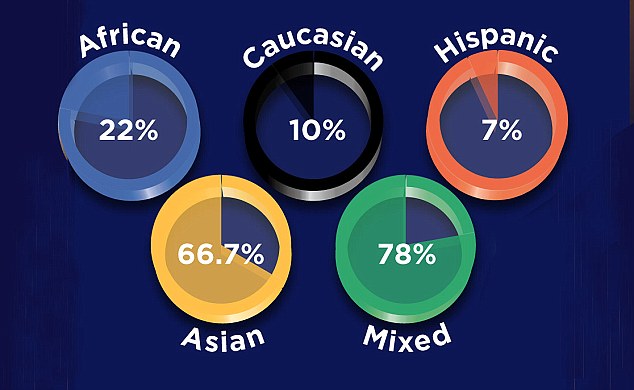
Astonishing though it sounds, significant numbers of sportsmen and women are born to dope, and get away with it. The proportion ranges from around one in 10 of those with European ancestry to one in five with African heritage, and up to a staggering two-thirds of people in some Asian countries, notably Korea.
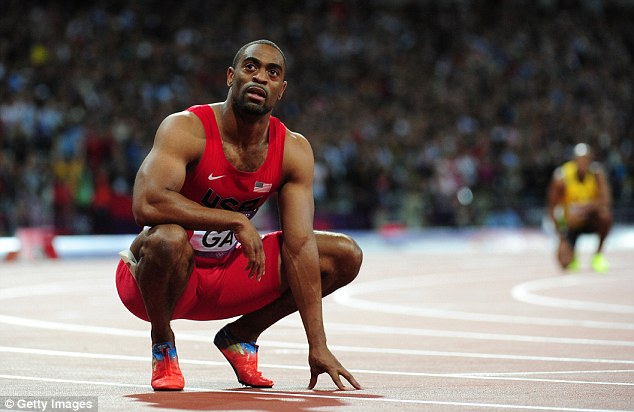
Facing a two-year ban: Tyson Gay had a positive test for a banned steroid
These shocking statistics, largely unknown to followers of sport, go part of the way to explaining the vast difference between the numbers of elite athletes who are taking banned performance-enhancing drugs and the numbers being caught. 
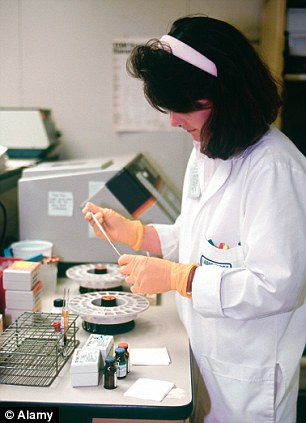
Tall order: Drugs testing now needs to take into account not only new drugs, but certain genetic differences
The most common type of drug test globally analyses urine to compare levels of testosterone (T) and another hormone, epitestosterone (E) to give a T/E ratio. This test can signify the use of all kinds of illegal drugs, including anabolic agents, which are the most commonly found drugs in dopers, 50 per cent of positive drug tests being for steroids — or artificial testosterone. 
When the T/E ratio exceeds four to one, it signifies possible doping. But people who have the ‘doping with impunity’ gene variant — carriers have two copies of a particular version of a gene called UGT2B17 — do not return positive tests, even if they have been doping. 
The gene variant keeps the T/E level low, naturally. That means huge swathes of the population have a licence to dope. 
Christiane Ayotte, a veteran in the fight against doping, says this is both shocking and frustrating because tests exist which could catch more drug cheats — including those whose genetic make-up enables them to dope with impunity — but these tests are not used by all anti-doping organisations or national sports federations.
Ayotte said last week: ‘I am sure many people will be shocked by the fact that sportsmen and women can be doping under the radar.
‘It would not be scientific to guess how many of all the tests in the world are still simple urine screening tests, which allow those with this gene to pass tests, but it remains the most  common testing procedure.
‘That is frustrating because it would not be so difficult to introduce other layers of testing, not just the T/E ratio, to catch people. But too many [anti-doping] organisations and federations don’t do it. We need to change this.’
Cause for concern? The percentage of each race who have the 'impunity gene'
Ayotte has served in the past as the International Olympic Committee’s overseer of doping laboratories, has worked on the medical commission of athletics’ world governing body, the IAAF, and runs a laboratory accredited by the World Anti-Doping Agency (WADA) in Canada.
Official figures on global testing in sport in 2012, collated by WADA, show that anabolic agents — steroids to you and me — remain the most commonly found illegal drug in the cheats’ armoury. 
More than half of all positive tests in the world in 2012, or 50.6 per cent, were positive for anabolic agents, which placed them way ahead of the next most common category of banned drug, stimulants, which were responsible for 15.5 per cent of failed tests.
Steroids may seem ‘old school’ but even some of the most high-profile cases of recent times have involved them, including the positive test just a few weeks ago of American’s former world 100m champion, Tyson Gay.
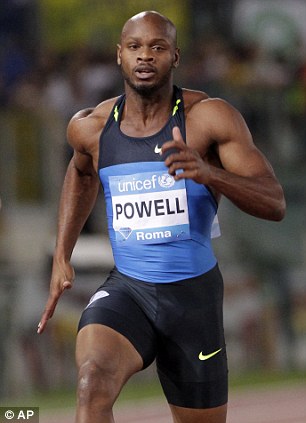
Asafa Powell
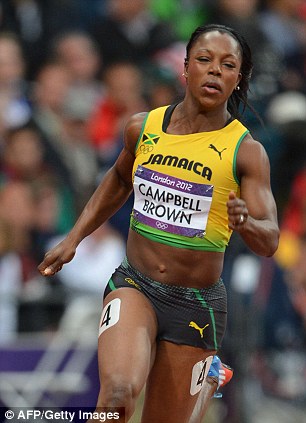
Jamaica's Veronica Campbell-Brown
Shocks: Jamaica's Asafa Powell and Veronica Campbell-Brown have both tested positive recently
He was caught because the testing used on his sample was a more advanced test, known as a carbon isotype test. These are not ‘standard’ and are typically used when a T/E ratio test has already flagged up a problem. An athlete with the ‘lucky’ gene make-up would not fail a T/E test in the first place and so would not expect to be subjected to more advanced testing.
A landmark Swedish study found that the ‘doping with impunity’ gene variant occurs in 66.7 per cent of Asian populations and almost 10 per cent of Caucasians. That study, partially funded by WADA, recommended that ascertaining every individual’s gene make-up would help to close the loophole open to those born to dope. 
But such additional profiling of athletes would be expensive, and possibly controversial among those who would regard it as a further invasion of  privacy, and does not happen.
As the umbrella body that encourage national doping agencies and governing bodies to do more testing and more complex testing, WADA face an uphill task. Wholesale changes in the WADA code, to be updated by 2015, will address this, as part of a wide range of new ‘smart’ testing.
Wrongdoing: Lance Armstrong's case highlights how cycling has been faced with the same drug problems
A WADA spokesman says: ‘The idea behind this better practice [from 2015] is that, at present, some anti-doping organisations do minimal or no testing for the prohibited substances or prohibited methods which are performance-enhancing in particular sports.’
Another study into the ‘doping with impunity gene’, which looked at football players and was published in the British Journal of Sports Medicine (BJSM), found that up to 81 per cent of some Asian populations had the ‘impunity’ gene variant, although this varied between countries.
Around 30-40 per cent of Japanese and Chinese have the gene, and almost double that in Korea.
The BJSM work found the levels to be 10 per cent in Caucasians and seven per cent in Hispanic populations.
The BJSM, like the Swedish scientists, also recommended that athletes should have an ‘endocrinological passport’ to prevent them exploiting the gene loophole. Ayotte echoes this, saying: ‘The best way forward would be to have subject base profiles.’ 
Disappointment: Christiane Ayotte says that countries are very slow in adapting new drugs tests
She explained that much like the biological passports increasingly common in sports like cycling, where an athlete’s blood is monitored over years, base profiles would flag up individual’s genetics that could be relevant.
David Epstein, an American is an expert on genetics in sport and the author of The Sports Gene, published in America earlier this month and in Britain this week. His fascinating book delves into various ways that genetics influence sporting ability. 
‘If we really wanted to be technologically savvy about drug-testing, we’d have to have genetically personalised testing,’ he told The Mail on Sunday. ‘And if I were an athlete bent on cheating, and I was aware of that gene, I would certainly get tested for it [to confirm an advantage on the testers].
‘If I were doing the drug testing, I would want to do carbon isotope ratio testing on everyone, to get around this problem and look straight for synthetic testosterone, but that test is costly and laborious and is infrequently done.’
It is impossible to know how many athletes are doping but passing tests because they have the ‘impunity’ gene. But certainly official WADA statistics show that certain major accredited labs in some Asian countries are returning many fewer negatives than counterparts elsewhere.
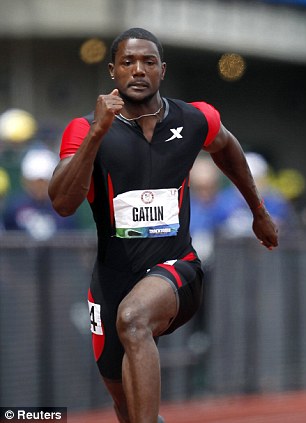
Justin Gatlin
Dwain Chambers
Second chance: Justin Gatlin and Dwain Chambers have both served bans for failed tests


Of 267,000 drugs tests conducted globally last year, 1.19 per cent had ‘adverse’ findings — or were positive — with a further 0.57 per cent ‘atypical’ and needing further investigation.
Rates of adverse findings were broadly in line with this at London’s major laboratory (0.74 per cent adverse findings), and in Sydney (0.76 per cent), Paris (1.97 per cent) and Stockholm (0.14 per cent). But the corresponding numbers in Tokyo were 0.16 per cent, and 0.34 per cent in Beijing and 0.48 per cent in Seoul.
It is impossible to know how many athletes are doping but passing tests because they have the ‘impunity’ gene. It may just be coincidental that laboratories in the regions where the gene is most common are finding fewer cheats. Or it may not…


Read more: http://www.dailymail.co.uk/sport/othersports/article-2401478/How-world-class-athletes-drugs--away-it.html#ixzz3C5ZdddO3
Follow us: @MailOnline on Twitter | DailyMail on Facebook

суббота, 30 августа 2014 г.

Steroids: The Birth of a Demon / How Steroids Became the Scourge of America

Ben-johnson

Here's what you need to know...

•  Due to harsh laws based on Reefer Madness-like myths, the personal use of steroids for aesthetic purposes can land lifters in prison or get them fined for more money than they probably have. Ironically, steroid usage in sports, which these laws were created to curb, has not decreased.
•  Steroids and other PEDs have been in widespread use in bodybuilding and Olympic lifting since the late 50s. Their usage in baseball, the Ben Johnson debacle, Lyle Alzado's questionable death, the Lance Armstrong farce, and the sad case of Taylor Hooton brought steroids to the forefront. Politicians and those with agendas took full advantage.
•  Although it has many medical uses and is now commonly prescribed to aging males, the illegal use of testosterone puts you into the same criminal category as a heroin addict. And science has never backed up the hysterical claims made by anti-steroid zealots.
"I think it's absolutely disgraceful that our government should be in the position of converting people who are not harming others into criminals, of destroying their lives, putting them in jail." - Milton Friedman
The following account is something I lived through and was a small part of. It is my view of the fascinating history of how steroids emerged as an ergogenic aid in sports and subsequently became an ominous facet of the modern age - becoming criminal while at the same time assaulting the very core of America by representing a proposed danger to our youth and, worse still, sullying the most hollowed of all things American - baseball.
This odd journey, especially the inception, involved numerous colorful characters from all over the globe who together eventually created a culture. Many of you reading this have adopted this culture without perhaps knowing the full extent of what it means to be a steroid-using bodybuilder and how it got that way.
I find it unfortunate that the younger guys embracing our culture today have to adapt to a whole different set of circumstances regarding steroids than my contemporaries did. Today you have to understand that the general public - the people you deal with, work with, live next to - believes that "steroids" cause a plague of maladies, from liver, brain and kidney cancer, to heart attacks and strokes, to psychotic episodes that end in madness, mayhem, murder and death. Given the current state of the public discourse, if your next door neighbor found out you were a juicehead, he'd probably wish you were a heroin addict instead.
Back when I adopted our culture it was perfectly acceptable to drive down to Mexico and buy all the real pharmaceutical gear I wanted, at incredibly low prices, and drive it back to LA with no problema. And no one cared if a bunch of guys down at the gym took steroids. We didn't bother anyone. We were totally under the radar and really not doing anything that wrong, certainly nothing even remotely felonious.
Well, it's not like that today. Not only are steroids listed by the feds in the same class as narcotics - with prison time for possessing, importing or selling them - the media has also driven the "Reefer Madness" hysteria to such a degree that there are families in Kansas who believe Gold's Gym is the incubator for the Zombie Apocalypse. What hatched such two-headed insanity? I'm going to skim over the last 30 years and describe what I believe are the milestones that lead to the concomitant criminalization and vilification of the very sex hormones our bodies produce.


The Perfect Steroidal Storm

The demonization of steroids in America has been perpetuated by three equally reprehensible yet powerful groups: vocal alarmists with agendas who incite hysteria based on fiction, the media who reports it, and the vote-hungry law-makers in Washington who believe they can do something about it.
In the 80-90 years that steroids have been around, they've gone from virtually innocuous, unknown medical compounds to a public menace nearly eclipsing heroin, cocaine, amphetamines and club drugs, with federal penalties for distribution and possession that can put you away for a fairly extended part of your life. How did the media wrap itself around this issue and funnel politicians, athletes and bereaved parents into promoting one of the biggest scams in US pop culture?
I've been around the block a few times, seen a bit of the world with all of the bark off, but I can't for the life of me think of another situation in which a single topic has gotten so misconstrued as that of performance enhancing drugs. With the mega amount of intellect in the demonization camp regarding PEDs, any person of reason would have to ponder... why? Unfortunately, when it comes to this group of drugs, most, if not all, common intellect goes right out of the window.
It was about that very same time 24 years ago that noted economist Milton Friedman uttered the words quoted above, and President George H. W. Bush signed house bill HR 4658 IH "Anabolic Steroids Control Act of 1990" into law, adding anabolic steroids to Schedule III of the DEA's list of controlled substances: the same legal class as amphetamines, methamphetamines, opiates, and morphine. Subsequently, in 2004, the law was amended to add prohormones and other "steroid like" compounds to the category, thus criminalizing anything that even remotely resembles testosterone or its effect. Later, the US Sentencing Commission reconvened to raise steroid penalties.
Today, in America, it is possible to be sentenced to 30 years in prison, and fined up to $5,000,000 for the possession and distribution (or importation) of testosterone, the very same hormone that human males and, to a lesser degree, human females, have been carrying around in our bodies since the early dawn of man. Let that sink in for a minute. Did I just say thirty years and 5 million bucks for testosterone? Yes, I did. We're talking about America here, not North Korea, right? How could such an insane thing happen? Well, let's work backwards.


Muscles, Narcotics, and Prison Time

Prison
First let me give you the sentencing guidelines as they stand today to give you the full magnitude of just how far we've come since the dawn of testosterone in the lab - the very same hormone that half of the American male voting public used to produce when they had testicles.
In the wake of the BALCO case, high ranking government agents were incensed over the four month slap on the wrist Victor Conte received after the government spent four years and over 50 million dollars chasing and prosecuting him. On March 27th, 2006, the US Sentencing Commission amended the sentencing guidelines for anabolic steroid cases by changing the way steroid quantities are factored to effectively increase sentences. The Commission's amendment made injectable and oral steroids comparable to other Schedule III drugs in a 1:1 ratio. That means that now, instead of the 50 pills that used to equal one unit, one "unit" of oral steroids is now one pill. One "unit" of injectable steroids goes from a 10 cc bottle down to half a cc.
Naturally, the government's 1:1 ratio is wrought with stupidity, not the least of which being the absence of any language pertaining to the potency of a particular drug. In the eyes of the law, a steroid is a steroid. That means a 5 mg Anavar tab is as equally felonious as a 50 mg tab of Anadrol, or 1 cc of equipoise being equal to a Sustanon 250 preload.
The guideline change also pays no attention to the diametric differences between steroids and other Schedule III drugs. All Schedule III drugs are narcotics that elicit an immediate, mind-altering effect when used for recreation, while steroids actually elicit a beneficial physical effect and no mind-altering effect. Unfortunately, no cogent argument can usurp the law of the land, which under title 21 U.S.C. states that possession of just one tablet of any steroid is now a federal crime punishable by up to one year in jail for a first offense, and up to two years in prison for anyone with a prior drug conviction.
And, if you think that's bad, you really don't want to get caught "distributing" steroids. The following increases apply to possession with intent to distribute, importation and internet sales.
For convictions of a "controlled substance in Schedule III, such person shall be sentenced to a term of imprisonment of not more than 10 years and if death or serious bodily injury results from the use of such substance shall be sentenced to a term of imprisonment of not more than 15 years, a fine not to exceed the greater of that authorized in accordance with the provisions of title 18, United States Code, or $500,000 if the defendant is an individual or $2,500,000 if the defendant is other than an individual, or both."
"If any person commits such a violation after a prior conviction for a felony drug offense has become final, such person shall be sentenced to a term of imprisonment of not more than 20 years and if death or serious bodily injury results from the use of such substance shall be sentenced to a term of imprisonment of not more than 30 years, a fine not to exceed the greater of twice that authorized in accordance with the provisions of title 18, United States Code, or $1,000,000 if the defendant is an individual or $5,000,000 if the defendant is other than an individual, or both."
What could this mean to you? Let's imagine you have a buddy down at the gym who picked up a few bottles of test for you and a few of his other buddies while he was down in Mexico. On his way back to the US he was detained by US Customs and searched, uncovering 30 or 40 bottles of various steroids. Certainly nothing out of the ordinary - for bodybuilders.
He was brought before a federal magistrate and charged with importation and intent to distribute a Schedule III drug. The judge looked at the unit amount of juice and figured he better not kick back to the state the prosecution of such a high-level steroid kingpin and assigned the case to federal court. And he probably won't grant bail because your buddy is considered a flight risk because he's an accused importer with alleged ties to a foreign country. Since the feds tend to feed upstream, they're not too likely to offer your buddy a deal to follow him to your house and wear a wire. But, the possibility does exist, especially if the investigation is being handled by inexperienced agents who, based on the unit amount and country involved, think they're investigating a savage steroid cartel.
If your buddy doesn't have a good lawyer he'll be convicted of steroid importation and possession with intent to distribute, and if it's his second offense, he could be looking at 20 years in prison. If someone gets hurt using the gear he imported then add another 10 years. And then there's the seven-figure fine...
While such sentences rarely ever see the top of the guidelines, the potential still exists, under the law, for a 30 year sentence for what would amount to a few bottles of testosterone you picked up for a few of your buddies along with your own. More down to reality, for a first offence: up to two years just for having it in your possession and up to five if you're importing and distributing anything even remotely considered rich.
The government has made sure there's no such thing anymore as a slap on the wrist for steroid crimes. The shameful truth of today is, if you're a national level bodybuilder and had all the gear you were going to need all year to compete hidden in a small trash bag under your bathroom sink, and your door got kicked in (after you accepted a package from a controlled delivery), the unit amount of all the gear in your house makes you a kingpin dealer and - if you don't have a good lawyer - you're going to pay a hefty fine, lose your house, your car, your job, any licenses you might have, the local media is going to portray you as something just shy of a child molester, you're going to prison for a long time and when you get out you'll have nothing coming; your felony record will haunt you long after you're off paper. Interesting risk that poses to a great many competitors these days.
Any reasonable person who knows anything about these drugs knows this is a tough pill to swallow, especially when you consider how steroids compare to other legal over the counter drugs, not to mention cigarettes and alcohol. To any reasonable person, the government's position on steroids is nothing short of lunacy.


Sports, Congress, and "Protecting the Children"

Test
How was public opinion swayed so far away from the truth? The media drove America into a virtual attack frenzy, concomitantly criminalizing and vilifying a non-narcotic, non-mind altering drug - a hormone naturally occurring in our bodies that can help us be stronger, more muscular, leaner, perform better and add quality to an aging male's life.
It basically boils down to this simple formula: alarmists with an agenda get the attention of the media that misstates facts, exaggerates claims, sensationalizes accounts and assigns blame without cause just to make the story sexy. This vomit lands on the over-coiffed crepe hair of vote-hungry politicians who will stand on their soggy vomit-clogged heads in front of the media and congress to lead another blind crusade against the biggest scam to ever invade politics: "save our children."
As far as steroids go, the most simplified version of what happened is this:
Steroids and other PEDs had been in fairly widespread use in bodybuilding and Olympic lifting during the late 50s and early 60s, especially internationally. While the iron sports kept a pretty low profile, the performance benefits of the drugs started seeping into other, more popular sports such as cycling and track and field. Their use proliferated, particularly in Olympic lifting, cycling, and track as well as other professional sports, particularly football - baseball came way later (at least that's what most people think).
While the NFL and MLB were still decades away from a published drug policy, an uproar was starting to build among top level amateur athletes amid failed drug tests and the marked increase in disqualifications in cycling and Olympic lifting, but nothing made quite enough noise to raise many eyebrows. Then in 1988 at the summer Olympics in Seoul, Canadian sprinter Ben Johnson plucked just 9.76 seconds out of the thin air that spanned the entire Olympic games and made them the most talked about sequence of numbers in recorded history next to 666.
It's not so much that Johnson tested positive for Winstrol after the race and ostensibly cheated his way to the world record. It had more to do with the Canadian beating the American favorite, Carl Lewis, by cheating - by usingsteroids! - in what's considered the most popular of all summer Olympic sports. Among the Walmart crowd, the only way Canada could beat America was to cheat.
But remember, science does not prove negatives. While Johnson's positive test proved he was taking Winny, Lewis's negative test results for banned drugs does not prove he wasn't taking them. It just means the test didn't detect any. Be that as it may, controversy breeds contempt just as well as it breeds headlines, and now steroids had a face: a revered champion of the most hallowed of Olympic sports. Johnson was surely a role model for millions of kids. The proposed message that sends to our youth, combined with growing alarmist reports that high school football players were using steroids, and the politicians had the hors d'oeuvre they needed to get dinner started.
Between Johnson's disqualification in 1988 and into 1990, Congressional hearings were held to determine whether the Controlled Substances Act should be amended to include anabolic steroids along with more serious drugs like Valium, opiates, and amphetamines. Congress was able to call witnesses whose stories would help support criminalization - from the masculinisation of a female Olympic athlete, to a pro football player suggesting (without any medical evidence) that his heart problems were linked to his past steroid use, to the conditioning coach for the Philadelphia 76er's who insisted "steroids must be considered a controlled substance, no different than cocaine."
However, it was an Assistant Professor of Psychiatry at Yale University School of Medicine, a guy named Kenneth Kashin, who spoke, verbatim, the words the politicians wanted to hear. The good doctor testified that "steroid use can cause an addiction with similarities to alcohol, opiate, and cocaine addiction." He talked about "dangerous criminal-like behavior while intoxicated on anabolic steroids" and individuals who have "lost control of their behavior," or "became violent." Yes, this puppet show really went on.
When all was said and done, despite the opposition of the DEA, AMA, the Department of Health and Human Services and the recommendations of the most knowledgeable experts, Congress changed the classification of anabolic steroids to a Schedule III controlled substances under Title 21 of the United States Code, which regulates food and drugs.
This is an incredibly significant milestone in the demonization history of steroids, especially where bodybuilding is concerned. It marks a turning point where a series of very interesting questions were being unanimously answered by American athletes, particularly bodybuilders, not to mention federation officials, judges, promoters, magazine publishers, supplement company executives, basically the entire iron industry. The dawn of the 90's ushered in the era of advanced pharmacology in bodybuilding just in time for the government to make most of it a federal felony.
The unanimous decision everyone ultimately made was to ignore the law. To this day, since the law was passed 24 years ago, the entire bodybuilding industry - among the competitors of all the various disciplines to the cottage industry that feeds off their bodies - there isn't the slightest hint there's a federal law that prohibits steroid use, trafficking, importing, buying it over the internet, possessing it, etc. Any top national bodybuilder and most IFBB pros could walk around with a flashing neon sign over their heads that says "steroid user," "drug dealer," "smuggler," or "internet buyer." It's a wonder they don't get caught, all of them, like yesterday, me included.
But such arrests are not as common as you'd think. Given the multitude of obvious, illegal drug-using bodybuilders out there, at least ten a week, and/or their dealers, should be getting popped all over the country. But they aren't. High profile bodybuilders, and most other athletes for that matter, seem almost immune to the law of the land. So, who is getting caught?


Athletes Walk, Recreational Lifters Do Time

What motivated Congress to ignore the advice of the experts and bulldoze this legislation through? Page after page of congressional testimony focused on just two points. First, the unfair advantage the steroid user has over those who don't use them; and second, Congress was able to leverage the nefariousness of cheating with the unsavory message that steroid use in top-level sports sends to our youth. If nothing else it would take the spotlight off of the pro athletes getting arrested for domestic violence charges, coke busts, sex offences and dog fighting. It's none of that, kids, it's steroids that sully the image of sports for you. Remember, cheating is bad. Especially if baseball is involved.
However, after two decades on the books it wasn't the cheating athletes who were getting caught - they just kept on cheating to the degree that college, and probably high school, football players figured out that it's just a matter of time before steroids come their way. It's a given.
For its intent, the law was a flop. What happened was that thousands of otherwise law-abiding Americans - not athletes, but mature adult males - have been arrested, arraigned, prosecuted, convicted, forfeited property, lost their jobs and their licenses, and sentenced to prison for the personal use of anabolic steroids. Virtually none of them have been top pro bodybuilders, Olympic athletes, NFL players and certainly not baseball players. They're not cheating in sports; they're not even playing sports. But they're the ones being dragged through the system by a law that was never meant for them.
Hundreds of pages of congressional transcript focused on promoting the even playing field in sports. Not a single word was ever paid to the probability that a healthy adult male, running a light cycle of test and deca to enhance the effects of his training, would be arrested and prosecuted. He's no one's role model and he's not cheating any other athletes. He's not bothering anybody. Yet I know for sure that the nation's top steroid law firms' files would support the claim that it is he, not the cheating athlete, being snared.
In light of the number of big-named athletes not appearing in the press on steroid charges, there were, nevertheless, widespread reports of steroid use among athletes using them to cheat. There was not yet any real danger associated with them. Of course there were reports of side effects and overdrawn reports of rage, but nothing to really irk the public in terms of the dangers steroids represent, especially to our precious youth.
Eventually, by direction of the media, the public discourse shifted to become less about cheating role models and more about health. Surely, if Junior is injecting a drug in the same class as heroin, he's going to become a strung-out juicehead and end up hanging himself in his bedroom or die another gruesome death from a degenerative disease such as cancer, or completely go crazy and shoot up his high school.
It was pretty much accepted that athletes are prone to cheating and probably using steroids to do so, but at what cost? Simply passing a law to target the athlete wasn't enough (never mind the fact that it wasn't even working). America needed a stronger message to send our darling children. Cheating isn't just immoral, cheating had to be dangerous because steroids are bad drugs. But, how bad?


Steroids: They'll Kill You Until You're Dead!

Lyke-Alzedo
A year after the legislation was passed, the most feared man in the NFL, Lyle Alzado, was diagnosed with brain cancer he said was brought on by steroid use. A year after he was diagnosed, he died from it: a frail, weak, quivering shadow of the man he used to be. Now, according to the media, steroids had openly claimed their first victim, a high ranking NFL star who died from steroids. The only problem? It wasn't true.
Of course the truth didn't matter. The health dangers of steroids now officially had a face, and it wasn't pretty. But it was selling like hotcakes on the multi-media machine. Kids looked up to Lyle, then he took steroids and he lied and then he died because he lied and took steroids. Oh, the travesty to our precious youth! Imagine the money the therapists will be making down the road when this trauma surfaces, manifesting mild schizophrenia and issues with trust and intimacy.
This set the stage for what was about to come. Steroid hysteria was in full swing. Any aberrant violent behavior, murder or suicide involving any athlete and Geraldo Rivera would immediately "smell steroids" with that enormous schnozz of his. News reports would abound about how - without any proof - steroids caused or contributed to such shocking behavior while completely ignoring much more relevant factors such as being on mismanaged psychotropic drugs, narcotic pain killers, alcohol or a combination thereof with or without underlying psychosis.
It got to a point in the mid-90s where virtually any unusual aberrant behavior reported in the press had some mention of "steroids." Defense attorneys even invented a "steroid defense" that relied on a convincing argument that "the steroids made their client do it." It worked a few times, but then the judges got wise.


Dirty Cheaters Save Major League Baseball

Sosa
The ensuing years brought us another pivotal point in the demonization history of steroids: the infamous baseball strike. More to the point, the subsequent resurrection of the game that had all but died during the strike.
The players going back to work wasn't enough to refill the stadiums. Nope, the strike-weary fans still weren't very happy. What baseball needed was some excitement. It needed a homerun race and the Bash Brothers and Roger Maris getting bumped out of the way. They needed McGwire and Sosa and Barry Bonds cracking them out of the park in a seemingly endless volley, racking up homeruns like nobody's business. The fans came screaming back.
MLB had its best year in history: a ten-digit payday at the very height of the steroid scandal, while the players who made it happen - who were told to do "whatever it takes" to make it happen - were getting thrown under the bus. The game was juiced and even Jose Canseco said so. In 2004, during his state of the Union Address, President Bush (former managing partner of the team for which Canseco played and earned the nickname "The Godfather of Steroids") demanded a crackdown on the drugs "because they are dangerous and send a bad message to our youth."
Weeks later, then Attorney General John Ashcroft read the indictment of Victor Conte and three others involved in the Bay Area Laboratory Cooperative (later to become infamous as "BALCO") on national TV - the scandal that later metastasized and drew Barry Bonds into the fold. All the while Congress convened and reconvened and held hearing after hearing on steroids in baseball to the preposterous degree that it spent more time talking about steroids than it did the economy, the war in Iraq or why the levies broke during hurricane Katrina, combined.


The Taylor Hooton Tragedy

Hooton
During one of those hearings, testimony was given by a guy named Don Hooton who blamed steroids for his son Taylor's suicide, as well as baseball itself, i.e. Bud Selig, for sending this lethal message to our youth. Hooton's convincing testimony chastising the idols of the great American pastime caught the attention of international news media and within minutes cemented Taylor Hooton's face among Alzado's and Johnson's when he gave teen steroid death a name that became a household word.
A handsome, white, 17 year-old high school baseball player from Texas named Taylor, cut down in the prime of his youth by the evil Schedule III drug that pro ball players use to cheat at America's great pastime... You might as well dress up as Hitler and set fire to the flag on your front lawn on Veteran's Day.
To us, Don Hooton's campaign is a laughing stock replete with sophomoric scare tactics and loads of erroneous suppositions, misinformation and outright lies. To the millions of bodybuilding forum members, Don Hooton is a tool. While that's a sad thing considering he buried his son, the truth is that for over a decade neither he, nor his Taylor Hooton Foundation, have proffered a singe truth when it comes to anabolic steroids. In no other single instance in the history of the steroid debate has the alarmist with the agenda made out as well for himself as Don Hooton, and mislead more people - including congress - doing it.
The ruckus Hooton has made over his son's suicide made Taylor's death a trending topic online for many years and certainly marks another milestone in the demonization of steroids. However, the Hooton case has also festered in the scientific community for over a decade now, calling into play some of the most respected and informed experts in the field. Among them, the widely accepted consensus is that steroids didn't kill Taylor Hooton.
The scene in Bigger Stronger Faster with Dr. Norm Foss pretty much epitomizes the opinion of unbiased experts. If there's a chemical to blame for inciting the ideation to hang himself, Taylor's death is, from a clinical standpoint, far more likely to have been motivated by the prescription anti-depressant drug he was taking: Lexapro, a popular selective serotonin reuptake inhibitor (SSRI). The data is just not there to put the blame on anything else.
And therein lies the rub. The Taylor Hooton suicide has been dissected numerous times over the last decade by numerous clinicians, scientists and healthcare professionals amassing quite a bit of peer reviewed and published data. Here's a brief synopsis of the published material by Dr. Jack Darkes:
"Taylor Hooton reportedly colored his hair and looked twice when he passed a mirror and was always concerned about his looks. In combination with a reported desire to be bigger suggests potential body dissatisfaction which is associated with both AAS use and suicide as a form of 'socially-prescribed perfectionism.' He had low self-esteem, a family history of depression (mother), a suicide attempt (sister) and was taking anti-depressant mediation (Lexapro). His AAS use was allegedly motivated by wanting to excel at baseball, although some sources have suggested it had more to do with personal appearance and status."
To date, there is no published data in the medical literature that suggests steroid use, or cessation of steroid use, by itself, incites suicidal ideation. However, the journals are rife to demonstrate suicidal ideation in adolescent patients treated with SSRIs. So, with so much statistical data against him, why has Hooton been blaming steroids and not SSRIs? Why is he picking on steroids, scientifically the least likely of culprits? Why is he campaigning so hard to demonize them?
Because, with such a vocal steroid attack in the wake of your son's suicide you not only get to testify before Congress during the baseball hearings, but also twice more. You get to start a non-profit foundation in your son's name and guilt guys such as Bud Selig into donating a million dollars on behalf of MLB. Then you name yourself president and decide to pay yourself up to 32% of the millions you take in to run the foundation. You get to go all over the country sounding like an expert and getting your picture in the paper and being named Texas Sports Personality of the Year by the Dallas Morning News. You don't get that going after SSRIs. Steroids made Don Hooton a celebrity. Steroids made Hooton a lot of money. Suing the makers of Lexapro would have gotten him nothing.
Either way, he's not getting his son back. Alzado's son isn't getting his dad back and history isn't taking back Johnson's nine-seven-six. So, rather than rile suburban soccer parents with sensationalistic lies that have the sky falling on our children, why not just tell the truth?
Forget the reality of their widespread use in professional sports, good science has demonstrated a real time and place for steroids among healthy adult males, especially as they age. The absolute garbage being proffered by guys such as Don Hooton is only eclipsed by the money they're making doing it. Proof, I'll reckon, is the fact that since Taylor Hooton's suicide over a decade ago, the scientific community has still not assigned "anabolic steroids" as the cause of one single teen suicide. Yet Hooton is still out there raking in millions preaching that it could still happen because - despite mountains of evidence to the contrary - Don says he knows that his son died from them. I'm sure Hooton is claiming this statistic as his victory. The only thing more revolting than Hooton's mission is the abject moron who supports him. Unfortunately, there are more than a few.


BALCO and Barry Bonds

Bonds
Shortly after the plea deal was reached with Victor Conte and the name "BALCO" became as much a household word as "Kleenex", the US Sentencing Commission reconvened to raise sentences for steroid cases. The 4 months Conte spent at Club Fed following a 55 million dollar investigation by the federal government was just not enough. The result of those Sentencing Commission hearings were those penalties I described at the beginning of this article.
While the circle seems complete, the story continued on. The federal agent who headed the BALCO investigation, Jeff Novitzky, became sort of a cult anti-hero, carrying the torch onward in his self-appointed fight against steroids. While there was never a formal order ever given to go after BALCO, Novitzky did, and to this day continues to do his best to lock up as many athletes as he can. Novitzky's tactics usually push the limits of legality and ethics, cheating just as much as the athletes he's chasing. The only difference is that he really doesn't ever truly win.
The BALCO case didn't yield much in the form of prison time for any of those snared in his investigation - at least not for steroids anyway - although several promising athletic careers were smashed and Olympic medals were taken back. Gold medal sprinters Marion Jones and Tim Montgomery actually did jail time, but for perjury and writing bad checks, not juice. Nevertheless, when the dust settled, Novitzky still had his claws in homerun king Barry Bonds, at that moment the most famous athlete on earth.
Novitzky's entire impetus for going after BALCO was to get Barry Bonds. Now he had him where he wanted him. Novitzky knew Bonds had taken steroids. He knew that Bonds's trainer, Gregg Anderson, gave/administered them to Bonds. All he had to do was prove it by getting Anderson to testify against Bonds, his childhood friend. Novitzky, the master of getting athletes to roll on each other, couldn't get Anderson to talk no matter how many months he spent locked away on contempt charges for refusing to testify. Ultimately, Anderson got out of jail. Finally, after an appeals court upheld his sentence in 2013, Bonds started serving his whopping two months of house arrest... for obstruction of justice.


Lance Armstrong

Lance
Ten full years and tens of millions spent since the BALCO raid that started it all and Novitzky still doesn't have a drug conviction of an athlete. So, what does he do in light of what could only be construed as a black eye for the government? Novitzky spends millions more going after America's favorite son, Lance Armstrong. Seven Tour victories? He must have been on something.
First, Novitzky went after disgraced Tour de France winner Floyd Landis and promised him immunity if he rolled on former teammate, Armstrong. Naturally, Landis agreed and then suddenly the most tested athlete in the world - who never failed a drug test - was being brought down by an "administrative positive." Landis, and an assortment of others, ratted out Lance. Luckily for Lance, the government is easing off on steroid prosecutions and opted not to prosecute him. Novitzky got to the altar a little late.
The Obama administration has openly said that enough time has been spent on steroids; those resources can be used for better things. Lance did have to step down from his philanthropic foundation and give back all his Tour victories as well as the silver medal he won in the Olympics. I'm sure we all sleep better at night now.
Novitzky's star seems to be fading. There's no one really left after Lance. Although he could start going after rappers. LL Cool J looks pretty jacked.


So Where Does This Leave Us?

A closer analysis of current events might look like we've come full circle. While the laws and penalties for steroids are quite unfavorable right now, you have to work a little harder at getting caught. My old friend Dr. Gary Wadler, a former leader of the World Anti-Doping Agency, said, "I don't think this administration has the same vigor as the previous administrations on the [PED] issue. That was clear from the beginning when Barack Obama was running for election [in 2008]."
So, where does that leave us? Well, you can still get 30 years for testosterone, if you get caught. That's a big if. It does however seem to be a bit smaller of an if as it was a few years ago. The hysteria seems to have ebbed. The alarmists have lost much credibility from parent groups calling creatine a steroid and Don Hooton proclaiming that veteran actor Tom Hanks opened a show on Broadway "high on steroids" for having had a cortisone shot in his injured hand. Don sounds a bit desperate.
Steroids are perhaps a bit less vilified today and have in fact been inducted into the modern American lexicon. "On steroids" is a phrase openly accepted even in advertising to depict the deluxe version of just about anything from pick-up trucks to non-stick cookware. Baseball is boring again. And any time any athlete ever does anything noteworthy it will automatically be assumed that he's "on steroids."
Chances are he is and no government willing to enforce laws against it is ever going to stop him. Part of the reason for that is the high degree of chemical engineering going on today that was extremely rare just a few years ago. Designer labs are certainly the new frontier. And the feds know it.
There's a big difference between hunting down high-profile elite athletes and cracking down on the new forms of steroids designed to sneak around the law. While the government might not be chasing big named athletes around with the wild geese, lawmakers are still reaping mileage out of the steroid issue. At the time of this writing, Reps. Joe Pitts (R-Penn.) and Frank Pallone (D-N.J.) have introduced legislation in the House designed to crack down on anabolic steroids masquerading as dietary supplements.
These "designer steroids" come in the wake of what was leaned from the BALCO case. The products are made by reverse engineering illegal steroids and slightly changing their chemical composition. Such reengineering avoids placement on the DEA's list of controlled substances, creating a nice fat loophole for athletes to pee into. Urine tests can only detect known substances. If you're taking something unknown, then you can't fail a drug test.
The House bill is the next step toward full passage of a law that will further empower the DEA with new tools to identify and quickly respond when new designer anabolic steroids are introduced and falsely marketed as dietary supplements. How much of a bearing will this have on us? Very little. The point is just to show that while the steroid issue may have lost its luster in the mainstream, there are lawmakers who still think the platform can buy them some votes.
Just remember, the public stigma against steroids may have relaxed a little and the government may have decided they've had enough congressional hearings on steroids, but that doesn't mean that getting popped for them isn't still a reality, nor that the effect that bust will have on you and your family will be anything less than profound, and it will get worse when your local paper runs the story.
Apparently, this is what's known as "evolution."